Monday, 11 April 2016

Feet First Games - Concept Artist Commission

For my final work experience opportunity, I was approached by a friend who was working on a game project of his own, with others. Through a private conversation, I agreed to a commission project to be a concept artist for his independent game company - Feet First Games. The commision involved designing illustrated concepts for a game's logo, as part of its pre-development concept work.

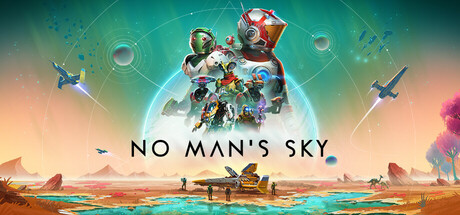
The first thing I focused on when designing the logo was what it was for. I created concepts for the company's sci-fi game - Distant Traveller. An early sketch of the logo (and potential cover design) can be seen below. The premise of the logo was to be an anonymous traveller looking up at a sun in the centre, with a white streak going across it. I drew inspiration from games with similar design aestethics, such as No Man's Sky (1).


I added to this by making the streak actually pierce the star (which can be seen cracking at the points of impact). The traveller is dwarfed by the surrounding spires and rock formations, indicating geological patterns not native to an Earth-like planet. Early on, the first colour I experimented with for the design was a deep red of the sun, which would be instantly recognizable to someone as a star from a different place in the galaxy than our own.

Next, I cleaned up the sketched lines and produced a digital version of the logo. This version has the basic colour and indications of detail and shading. Some changes I made include making the sun bigger, and showing the fragments of the sun breaking off as if it were a solid entity. The landscape has been further structured and will show the light of the sun during the shading stage. I have also added a colour gradient for space and stars to show the presence of other suns in the galaxy.


A vast improvement can already be seen from the concept sketch, and it is possible to see what the final logo will look like from the above concept. Working with my friend who commissioned me, I present him these production concepts and continue with them if they are thought to convey his original idea. If any elements need changing, I can do so as it is easy to do so in a digital format.

Although this work experience commission is only for development of the logo, there is a possibility of me staying at the company for more pre-development work. This commission gave me a taste of development of ideas, working with a project partner, and being able to recieve and work around critical feedback for my concepts.


------------------------------------------------------------------------------------------

(1) No Man's Sky promotional art - Hello Games. (2016). [image] Available at:  http://cdn.akamai.steamstatic.com/steam/apps/275850/header.jpg?t=1457021504 [Accessed 11 Apr. 2016].


Professional Practice Evaluation

The Professional Practice module is made up of two major parts. The first is the requirement for an assortment of work experience opportunities, both inside and outside of the University. I am pleased that I managed to meet these requirements, and with a range of different forms of work experience. From this part of the module, I learnt how to contact individuals/companies and ask for experience, as well as how and where to find similar opportunities in the future. On the other hand, I found it difficult to find practical work experience near me, with internet conversations seeming to be the most effective method of getting interview opportunities and direct communication. Another drawback of contacting people is waiting for responses, which usually made my email interviews several weeks (and sometimes months) long. Though I appreciate that this cannot be helped with the busyness of many artistic careers in the modern world.

The second part of the Professional Practice module involves producing and printing several editions of an independent newspaper publication. Over the weeks, I am disappointed that not much progress was made towards this part of the module. Many parts of the newpaper's production relied on co-operation with other members of a team, which did not happen as often as needed. Near the end of the module, I was found to be abandoned by these members and was required to produce an individual publication within a short period, which could not be achieved in the time. However, I did learn how to conduct independent research on a subject, as well as how to produce a publication through this method - which could assist in my artistic career.

Overall, I am happy with the range of work experience I managed to collect, though it was difficult to obtain through traditional methods. With the newspaper, I am disappointed that team and time-management complications could not produce the finished publication, while I did learn the process of how to create it for future projects.

Jeremy Fenske - Concept Artist Interview

After looking for games development work experience became a dead end for me, I decided to change course and contact some concept artists. Through searching on conceptartworld.com, I discovered a concept artist whose style I found intriguing, named Jeremy Fenske. Over the course of the next few weeks, I conducted another email interview with him that he had agreed to do, with the resulting conversation log below.


----------------------------------------------------------------------------------------------------------


Tuesday, 15 March 2016

Review of Promotional Materials

For one of the professional practice assignments, we had to select five different items that we thought were successful pieces of promotional material, as well as ones that simply caught our attention. We then had to make reviews about each one, explaining how and why we chose the selected items.


Tara Adams

1) I was attracted to the high level of detail in this item.

2) I think the purpose of the promotional item is to be sold as individual prints - either in person or online.

3) This item has a certain degree of longevity.

4) The item is black and white and illustrated with a high level of detail, which is appealing as it draws your eye around the illustration, while retaining a good white balance. I don't think the illustrator tried to portray a message with the item.


Ben Campbell - B.A.C. Illustration


1) I was attracted to the bold monochromatic style, as well as the detailed texture work throughout.

2) I think the purpose of the promotional item is to be sold as individual prints - either in person or online.

3) This item has a large degree of longevity.

4) The item is black and white and illustrated with a high level of texture and detail, which is striking and gives a sense of how much time and attention was put into it. The illustrator tried to portray a message of not worrying about the future, but seizing the day instead, with the item.


Emily Rogers - Lady Gloom


1) I was attracted to the uniqueness of the item, as well as its unique and alluring patternwork.

2) I think the purpose of the promotional item is to be sold on Etsy, or be sent to clients.

3) This item has a very large degree of longevity.

4) The item is black and white and adorned with complex and symmetrical illustrated patterns, which is aesthetically interesting and demonstrates skill. The illustrator tried to portray a message of being unique, with the item.


Asillu


1) I was attracted to the clean use of digital colour and smaller size of this item.

2) I think the purpose of the promotional item is to be sold as individual prints - either in person or online, or be sent as an example to clients.

3) This item has a small degree of longevity.

4) The item is brightly coloured and the illustration is crisp, which shows a confidence in the production of the item. I don't think the illustrator tried to portray a message with the item.


Keri Green


1) I was attracted to the soft and bright colours of the item, boasting a striking visual style.

2) I think the purpose of the promotional item is to be put on a wall or be used to advertise and direct traffic to sites.

3) This item has a small degree of longevity.

4) The item is multi-coloured with soft textures and lends itself to a friendly atmosphere, which makes the viewer feel happy and safe. The illustrator tried to portray a message of having fun, with the item.


------------------------------------------------------------------------------------------------------------


Monday, 22 February 2016

Clare Rowe Lecture

Clare Rowe is a British Illustrator. After graduating from art college, she went to a design studio and made designs for the company, Lush - where she worked at the time. This experience taught her how to balance work with her own illustrations. Early on, she used internet blogs, Flickr, and Etsy to push and sell some of her work. Her first competition out of college was with Tiger Print, a subsidiary company of Marks & Spencer, which she won. She became a freelance illustrator working on several of their projects for a couple of years afterwards.
          Later, Clare was featured on Design Sponge's blog, a popular website that caused the illustrator to receive various commissions from her feature. She moved from Plymouth to Bristol so that she could better get the opportunity to work on more work, as well as showcase it to a larger public audience. Soon after, she was licensed by Urban Outfitters and Chronicle Books to create exclusive designs - this led her to illustrate a book called "Heels on Wheels." This meant that she sold licenses for her own illustrated designs to these clients. She discovered the risks of this, and losing the ownership of her work when a client or designer decides to change the design themselves. One example of this was the alterations made to her design for a book called "A Safe Place for Dying," which she was not pleased about. Throughout all this, Rowe noted the importance of self-initiated work, as well as illustrating for a living. She found a studio space with other illustrators, inlcluding Tom Frost and Ben Newman. Whilst there she used her self-directed studies to experiment with editorial illustration, which was later used by YCN and Hallmark. Clare later worked at MeriMeri Design Studios for a year, though she struggled with it and was made redundant after this time. She moved on to work at Urban Graphics for six months, as well as working closely with an American agent on publishing her designs for both traditional and online editorial work, including women's magazines. She also found time to pursue her interests in interior design work.
          Currently, she is still working with Hallmark and other companies, in freelance card design, as well as using her self-initiated work to fill gaps in her portfolio. No matter what, she focuses on her personal illustration and continues making work. Clare is also studying gor a Master's degree (MA) at the University of the West of England (UWE) - in which she is able to explore creative processes with her work, such as screenprinting and ceramics. She participates in an Artist's Residency at Plymouth College, as well as attending print exhibitions and fairs to keep pushing her work to potential clients. Another current project is her work with making advertisements for a lip balm company. As for pushing her work, she now utilises sites like Pinterest, Tumblr and Instagram.
          Clare's main sources of inspiration can be found in other creatives, such as Andy Miller (host of the Creative Pep Talk podcast), Kaye Blagrad, and Carson Ellis. She also finds encouragement through Austin Kleon's books: Show Your Work! and Steal Like An Artist. Some things that she has learnt through her career as an illustrator are as follows. Illustrators get faster at working in time - each illustrator has different growth and success paths. All illustrators must share their work, and must learn to not be disheartened from a rejection for a commission, or negative feedback. Every Art Director works with illustrators in different ways, and the work is as hard as it is rewarding. She believes that the most important lesson is that illustration isn't ageist, racist or sexist - it welcomes all creatives no matter who they are.

Thursday, 18 February 2016

Bjorn Lie Lecture

Bjorn Lie is a Norwegian Illusrator who has worked in many fields of illustration for over 14 years - inluding editorial illustration, design, textiles, packaging, branding and picture books. He balances between commercial and artistic work, but feels it is also important to keep up with personal work. Adapting his workstyle to target different audiences, Bjorn's work has been published internationally.
          The visual language of his work consists of four major themes: characters, humour, nostalgia, and nature.


  • Characters - He has designed crowded street illustrations/covers, and created his own comics and magazines featuring original characters.

  • Humour - Being inspired by Folk Art Illustration, he created work around that style. He later visited "Yeehaw Industries" - the company that inspired this work.

  • Nostalgia - He likes to think of himself as old-fashioned, as he has been inspired by the naivety of old magazine advertisements, often parodying them in his illustrations.

  • Nature - Some of his work is based on Norwegian trees and forests (mostly printed on his textile work). He made a children's book based off Skiing, called "Slush Mountain."

In his youth, Bjorn was also inspired by graffiti art and comics, later discovering Sandman and the work of Hando Kjendo. He studied at Falmouth University, and upon graduating, found the then-new Internet to be instrumental in him getting illustration work. 

In 2003, Lie moved to Bristol,, using the time to make two further children's books. One of these was "The Wolf's Whistle," which combined elements of limited colour with the cinematic style of Film Noir. He also collaborated with NOBROW on several illustrations. One other example of work he produced while in Bristol is his comissioned branding of the 'Jackson and Rye' restaurant. This included illustrated designs for their menus, coasters, serviettes and even business cards.

His work on picture books is particularly extensice. Bjorn made a Norwegian story about loneliness, using limited colour and a more subtle approach to the image's composition. Inspired by Eric Ravillious, he combined avant-garde illustration with Japanese block print techniques. Other techniques, compositions and colours were considered before he settled on this style for his picture book.

Bjorn makes time to experiment with his personal work. In this, he often creates scalpel drawings and etchings, and works to avoid overworking an image. He is most fond of experimental with the botanical drawings of Ernst Haeckel. These microscopic studies found Bjorn other commissions, including using the studies for more clothing work, as well as for The New York Times newspaper.


-----------------------------------------------------------------------------------

Thursday, 28 January 2016

Third Year Presentations

The third-year illustration students presented their FMP's and Experimental projects to us, aiming to give us ideas for the broad range of projects available to us when we have to do the same. Of the presentations, three projects were prominent: Planning and Pitch, the Research Project, and the Final Major Project (FMP). Some ideas of tasks for each project are listed below.


Planning and Pitch

- Design sheets.
- Kickstarter funding.
- Constant experimentation.

Research Project

- Use all forms of media in work.
- Artist research.
- Constant research and development.

FMP

- Branding.
- Be original.
- Get out of comfort zone.
- Show evolution of ideas.
- Constant experimentation.
- Something that can be produced and sold.
- Constant research and development.


-----------------------------------------------------------------------------------------------